

Do you remember that sensation? When you type in a query into Google then hit enter and the answer pops up immediately. You don’t have to click. There’s no scrolling. A clear and assured response right at the highest point of the page.
Perhaps it’s a clear definition in a neat container.
Maybe it’s an easy-to-follow list.
Maybe it’s the table of comparison that ends any debate in a flash.
This, dear reader, is the potential of snippets in seo as well as their equally impressive partners, resulting in rich results.
Zero-click searches are growing exponentially. The goal of Google isn’t simply to deliver visitors. They want to be able to answer your questions quickly by displaying them directly on its search results page. For content creators, marketers and marketers we have two options to either take on the trend (spoiler that you’ll lose) or develop a clever snippet strategy and take advantage of the waves.
It’s not about superficial measures. Achieving snippets in seo can have a real-world positive business results:
- Unmatched Visibility: Your site appears over the top organic result, which is the highest-value space on the page.
- Instant Authority: Google basically says “This is the best answer.”
- Brand Recall for Steroids: Even without an action, people will remember whom they consulted to solve their problems.
- Vocal Search Dominance: Voice assistants get answers directly from the snippets of content.
- Long-term Traffic Gains: The number of searches for brand names increases the trust of users, as well as clicks increase.
If you wish to get featured snippets regularly, you have to know how this game is.
Why Snippets in SEO Are the New #1 Priority
The ranking on the first page was the norm. Today? It’s table stakes.
Snippets in seo live on the VIP lounge, which is above the first page, and here’s what they need to be able to get your focus:
- The Attention Vortex: The SERP is dominated by visuals. Research shows that they are often the first thing that users see. They can receive as much as 35% of the total number of clicks even when they’re in no-click situations.
- The Answer-First SERP: For queries that are informational (what, why, how, who) Google increasingly prefers direct responses. If your site isn’t optimized to be optimized for snippets seo then you’ll be invisible to highly intent queries for informational purposes.
- Voice Search Runs on Snippets: Ask Google Assistant or Siri a question. What are they reading? A snippet.
Owning snippets in seo means owning voice search. - Trust by Association: If Google decides to use your site’s content as an ad hoc snippet, the users instantly consider you credible without any explanation of your backlink.
- Competitive Moats: The process of achieving #1 rank is difficult. Being #1 while holding the featured snippet box? It’s a wall that your competitors dislike climbing.
In the end: If snippets in seo aren’t an integral part of your overall strategy, then you’re putting the possibility of authority, visibility and potential growth out of the equation.
Understanding the SERP Ecosystem: Snippets, Rich Results & Beyond
Before you are able to win feature snippet positions, you have to be aware of how you can optimize your strategy for:
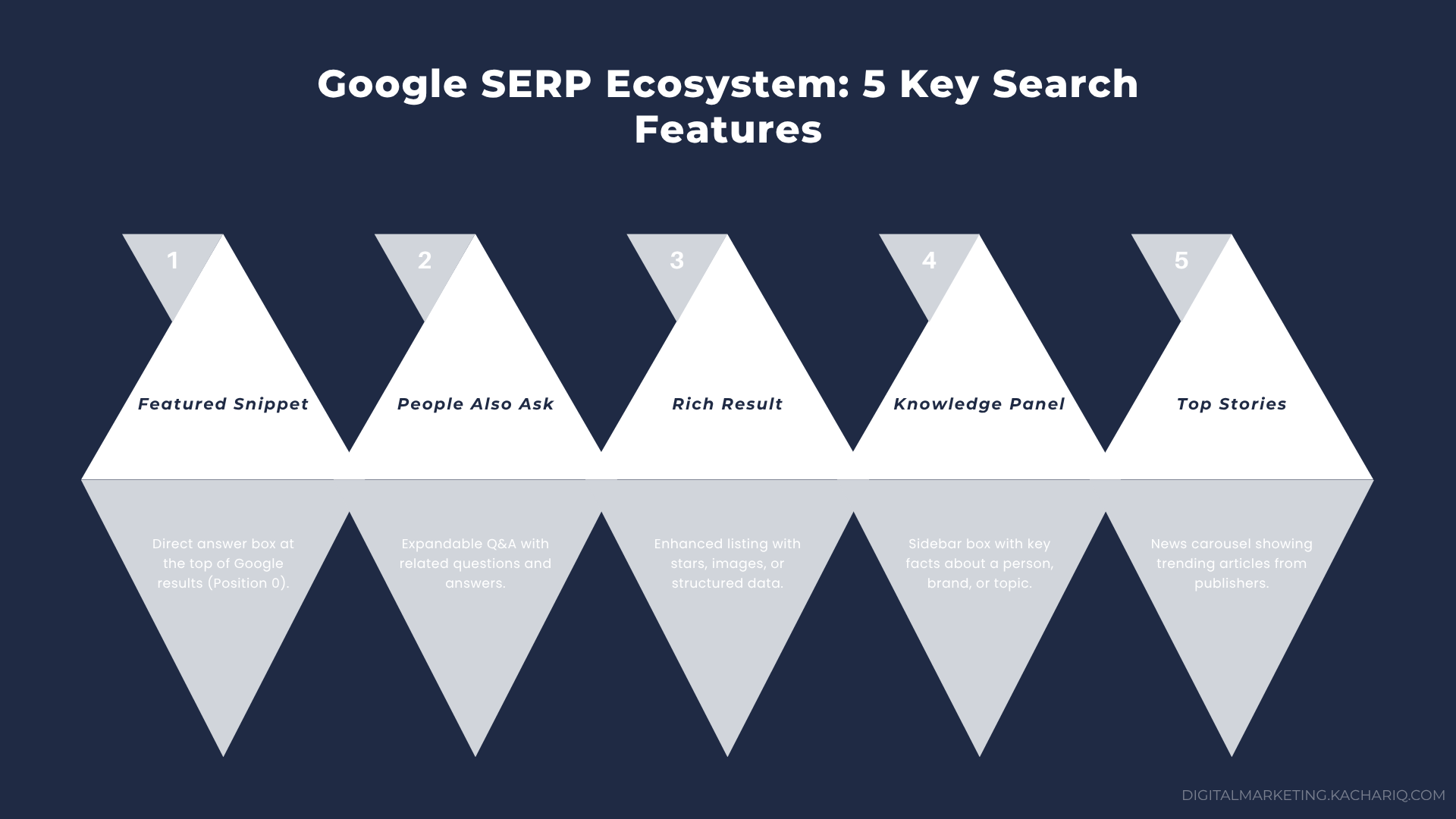
Snippets in SEO (Position Zero):
These are selected portions of the content that are displayed over organic listings in order to answer an inquiry.
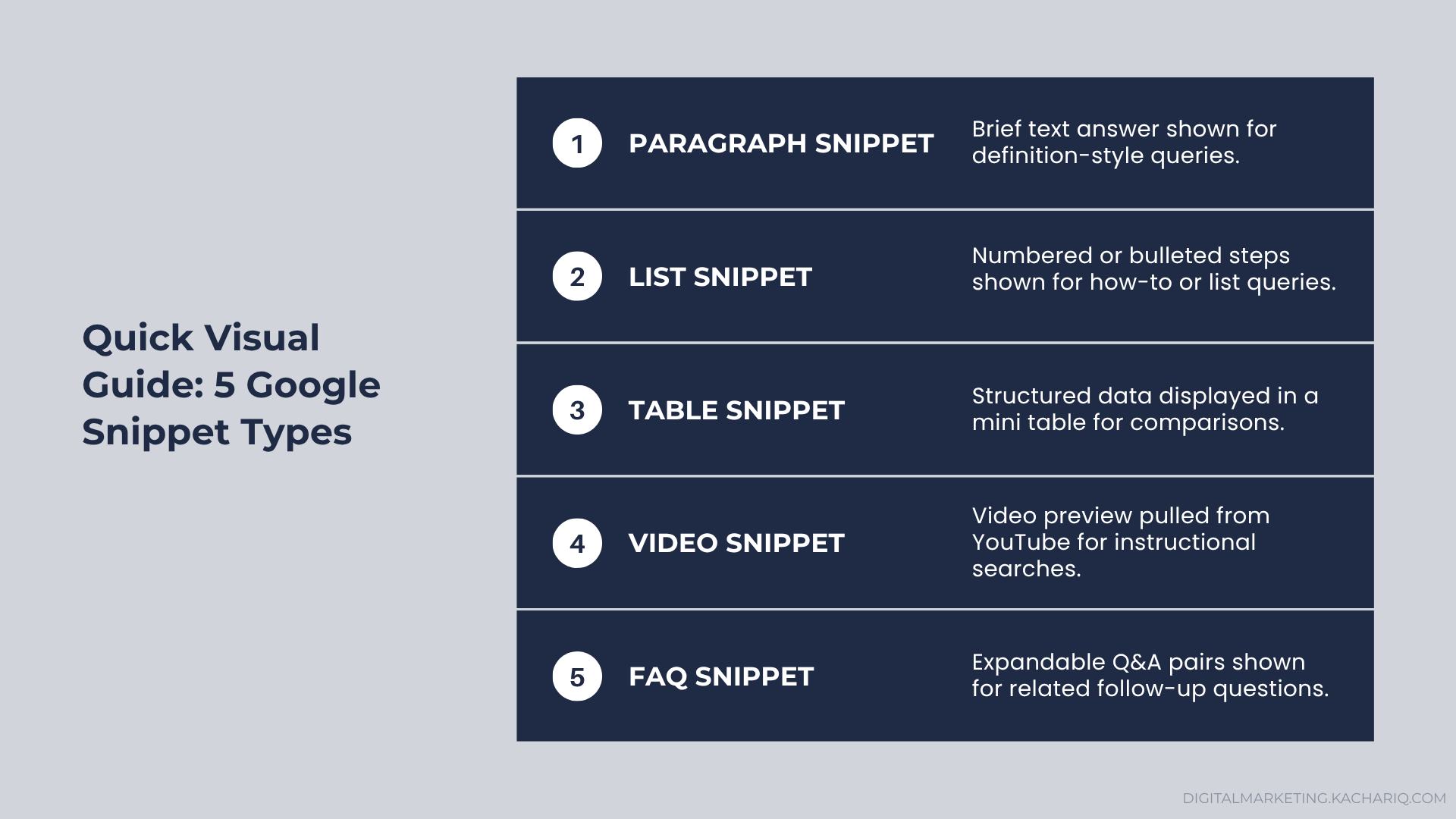
Common formats are:
- Paragraph Snippets: Paragraph snippets are short descriptions (usually 40 to 60 word).
- List Snippets (Bulleted or Numbered): List snippets that are bulleted, or with numbered steps.
- Table Snippets: table snippets Comparisons structured or data.
- Video Snippets: video snippets Commonly downloaded from YouTube.
Rich Results (Enhanced Listings):
They appear in natural results, and are driven through structured data. They aren’t atop results However, they significantly increase their visibility.
Examples include:
- Review Stars: Displaying aggregate review ratings.
- Product Information: Price, availability, ratings (for e-commerce).
- Recipe Information: Cooking time, calories, ratings.
- Event Information: Dates, location, tickets.
- FAQ & How-To Rich Results: Displaying Q&A or steps directly on the SERP (powered by specific structured data).
- Job Postings: Salary, location, company info.
That’s where the featured snippet schema along with other data types enter the picture.
People Also Ask (PAA):
Interactive boxes listing related questions. Clicking one expands a snippet answer (often triggering another set of PAA!). Crucial for topic coverage.
Knowledge Panels:
Information panels about entities (people, places, organizations) sourced from Google’s Knowledge Graph.
Key Distinction: Featured Snippet Optimization focuses on winning that specific Position Zero box. Rich Result Optimization focuses on getting any enhanced listing within the organic results using structured data. Both are vital for zero-click dominance!
The Non-Negotiable Foundations for Snippet Success
You can’t just slap “how to” on a page and expect the snippet crown. Winning requires a solid foundation:
Content Quality is Non-Negotiable:
Google rewards E-E-A-T (Experience, Expertise, Authoritativeness, Trustworthiness). Your content must be:
- Deeply Informative: Exhaustively cover the topic. Be the definitive guide.
- Accurate & Up-to-Date: Fact-check ruthlessly. Update regularly. Stale content loses snippets.
- Well-Structured: Clear headings, logical flow, scannable. (More on structure below!).
- Original: Offer unique insights, not just regurgitated info. Add your voice, your experience.
Technical SEO Health:
If Google isn’t able to crawl or read your site, it will not get featured snippets.
- Blazing Speed: Core Web Vitals matter. A slow page won’t win.
- Mobile-First Perfection: The vast majority of searches happen on mobile. Your site must be responsive and fast on mobile.
- Clean Code & Indexability: No crawl errors, proper use of robots.txt, canonical tags. Ensure JavaScript content is rendered.
Snippet-Focused Keyword Research:
Traditional volume just isn’t sufficient. Look for snippet intent:
- Question Keywords: (” what is snippet in seo“).
- Definition Keywords: “Define…”, “Meaning of…”.
- Comparison Keywords: “X vs Y”, “Difference between X and Y”.
- List Keywords: “Top 10…”, “Benefits of…”, “Types of…”.
- Use Tools: SEMrush’s “Keyword Magic Tool” (filter by Questions), Ahrefs’ “Questions” report, AnswerThePublic, AlsoAsked.com. Look for keywords where a Featured Snippet already exists – that means Google wants one!
Established Authority:
While not an absolute prerequisite, having some domain authority and backlinks signals trust, making Google more likely to feature your content. Focus on building topical authority within your niche.
The Step-by-Step Snippet Strategy to Win Position Zero
Now, the moment you’ve been waiting for: How do you actually WIN those coveted Featured Snippets? It’s a blend of art (understanding user intent) and science (technical execution).
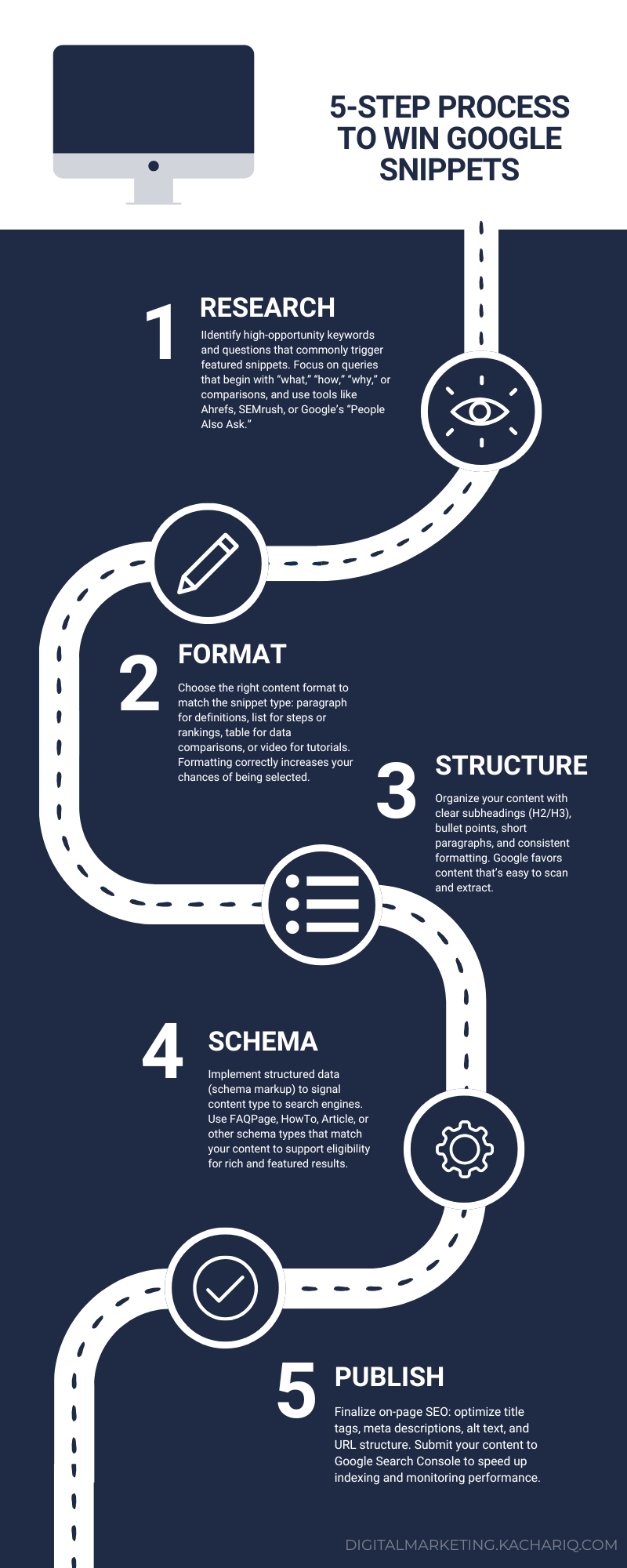
Step 1: Identify Snippet Opportunities
- Audit Existing Content: Use tools like SEMrush, Ahrefs, or Moz to see:
- What keywords are you ranking on Page 1 (Positions 1-10)?
- Which of those keywords have a Featured Snippet?
- Are you currently in that snippet? If not, who is? Analyze why they won.
- Target “Snippet-Ripe” Queries: Prioritize keywords where:
- A Featured Snippet already exists (proves Google wants one).
- You rank on Page 1 (ideally positions 1-5). Winning from page 2 is rare.
- The query has clear informational intent (question, definition, list).
- Analyze the Current Snippet Holder:
- Format: What type is it (para, list, table)?
- Content: What specific question does it answer? How concise is it? What’s the tone?
- Source Page: How is their page structured? What heading did they use? How is the answer formatted on their page?
Here’s the exact way you can win feature snippet positioning.
Step 2: Structure Content for Snippet Eligibility
- Directly Answer the Question (Immediately!): Don’t bury the lede. Within the first few sentences of a section, provide a clear, concise answer to the specific query. This is crucial for Paragraph Snippet Optimization.
- Structure is KING: Use clear, hierarchical heading tags (H1, H2, H3, H4). Format your answer logically based on the snippet type you want:
- For Paragraph Snippets: Place the concise answer (40-60 words) immediately under a relevant H2 or H3 that matches the query (e.g., H2: “What is a Featured Snippet in SEO?”). Use plain, descriptive language.
- For List Snippets (Bulleted/Numbered):
- Use actual “ (unordered/bulleted) or “ (ordered/numbered) HTML lists. Do not just use dashes or numbers in paragraphs.
- Place the list under a clear H2/H3 heading that implies a list (e.g., “Steps to Optimize for Featured Snippets,” “Top 5 Benefits,” “Types of Rich Results”).
- Keep list items concise and parallel in structure.
- For step-by-step guides (How-To Rich Results potential too!), numbered lists are essential.
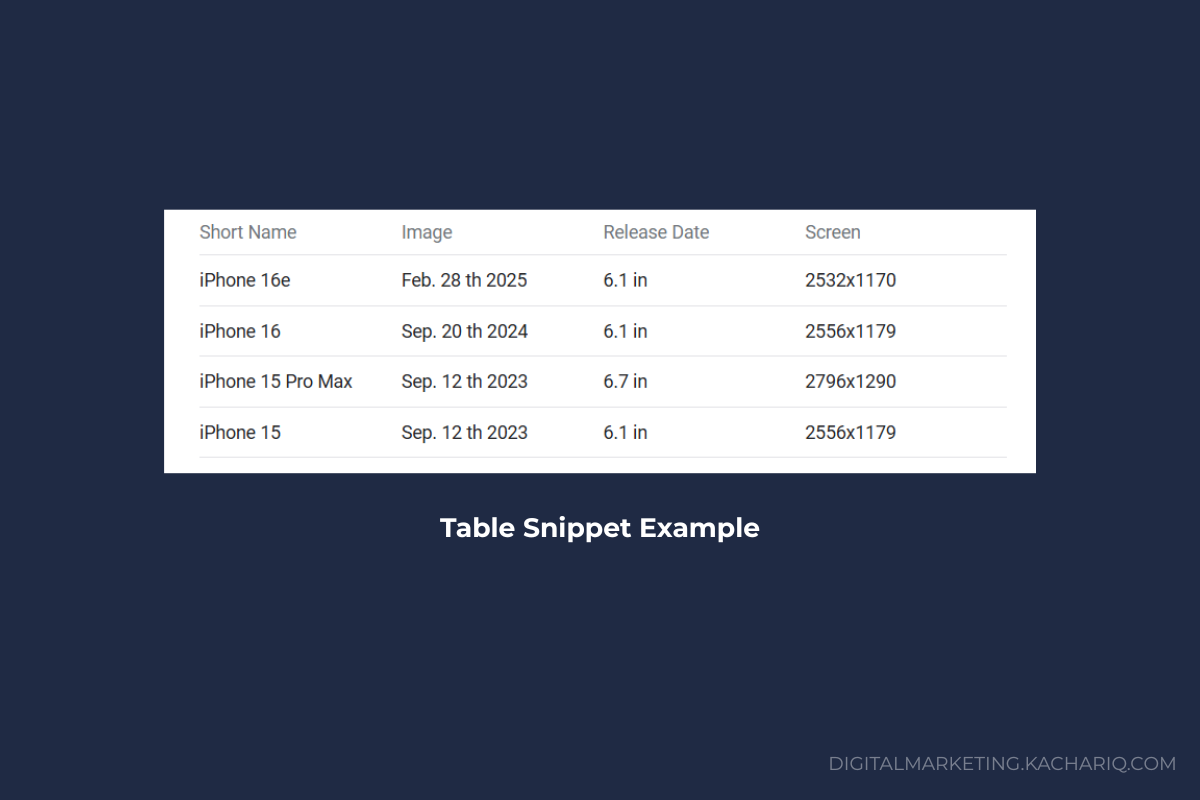
- For Table Snippets:
- Use basic tables on your webpage to organize data clearly. Tables should include a header row, rows for each data item, and clear column labels.
- Place the table under a relevant heading (e.g., “Comparison: Featured Snippets vs. Rich Results”).
- Make sure your column headings are descriptive and easy to understand (like “Feature”, “Benefit”, or “Comparison”).
- Keep tables focused and relevant to a direct comparison or data presentation query.
- Perfect Your Paragraph Snippet Formula: For those coveted definition/explanation boxes:
- First Sentence: Directly answer the question. Start with the keyword if natural. (e.g., “A Featured Snippet in SEO is…”).
- Conciseness: Aim for 40-60 words. Be precise.
- Comprehensiveness: Cover the core “what” or “why” succinctly.
- Context: Briefly add why it matters or a key detail.
- Placement: High up under a relevant heading.
- Leverage Schema Markup (Structured Data): While not a direct ranking factor for traditional Featured Snippets, structured data helps Google deeply understand your content, increasing the relevance and clarity of your information. This makes it more snippet-worthy. Crucial for Rich Results! Key types:
- FAQ Page: For pages with Questions & Answers.
- How To: For step-by-step guides.
- Article: For news, blog posts, etc.
- Product, Recipe, Event, Job Posting: For specific verticals.
- Validate: Always test your markup with Google’s Rich Results Test.
The structure significantly increases your odds of obtaining the featured snippet box.
Step 3: Target the “People Also Ask” (PAA) Goldmine
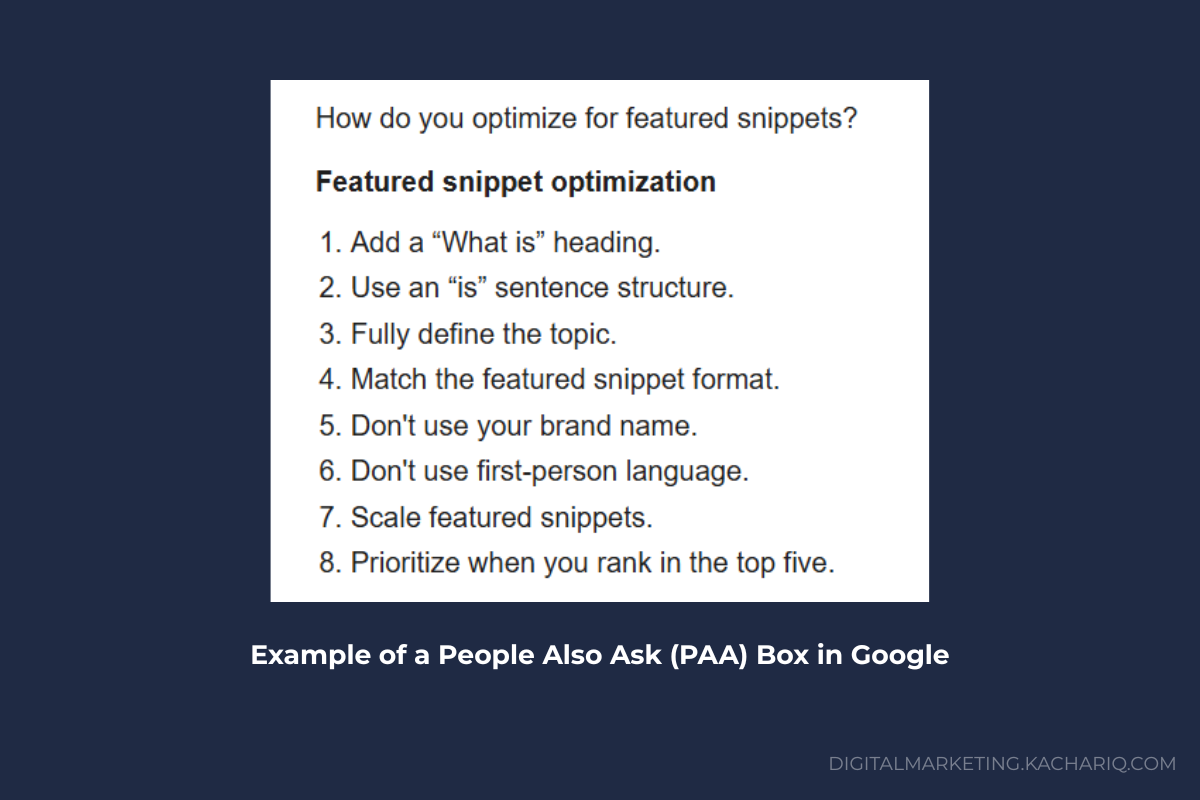
PAA boxes are not just features; they are opportunity generators. Each question represents a potential Featured Snippet.
- Expand Your Content: Identify relevant PAA questions related to your target keyword. Dedicate H2/H3 sections in your content to answering each of these questions clearly and concisely. This signals comprehensive coverage to Google.
- Capture New Snippets: By answering PAA questions directly on your page, you increase the chance of your content being featured within the PAA box itself when someone clicks on that question.
- Uncover Long-Tail Keywords: PAA questions reveal the deeper, more specific questions users have – perfect long-tail keywords to target.
This will strengthen the overall snippet strategy and increase the authority of your topic.
Step 4: Optimize for Voice Search (It’s All About Snippets!)
Voice search queries are typically longer, more conversational, and phrased as questions – exactly what Featured Snippets answer.
- Focus on Natural Language: Write how people speak. Use conversational phrases and question-based headings.
- Target Question Keywords: Explicitly optimize for “who,” “what,” “where,” “when,” “why,” and “how” queries.
- Prioritize Concise, Direct Answers: Voice assistants read snippets verbatim. Your answer must be clear, complete, and sound natural when spoken.
- Local Intent Matters: Many voice searches are local (“near me”). Ensure local business info (NAP: Name, Address, Phone) is consistent and marked up with ‘Local Business’ schema.
Step 5: Master the On-Page Nuances
- Heading Optimization: Use your target question/keyword naturally in the H2/H3 heading directly above your snippet-optimized answer. Avoid keyword stuffing.
- Context is Key: While the snippet itself is concise, ensure the surrounding content provides depth and context. Google wants the snippet to be a true representation of a valuable section.
- Use Supporting Media (Wisely): Relevant images, videos, or infographics near your snippet answer can enhance engagement and understanding, but ensure the core text answer is self-contained.
- Internal Linking: Link to other relevant, in-depth articles on your site. This helps Google understand your site structure and topical authority, and can provide context if your snippet answer is brief.
Conquering the Rich Results Realm: Beyond Position Zero
Position Zero is powerful, but it’s not the whole battlefield.
Rich results can help you gain visual prominence within the organic search results and make your site sparkle with price, stars, FAQs, videos, steps-by-step directions. In conjunction with a sophisticated snippet strategy that dramatically boosts search engine visibility and click-through rates. In the midst of all these results lies one factor: organized data.
- Structured Data: The Language Behind Snippets in SEO:
Structured Data (Schema.org) is a way to inform Google precisely what your information is. In the absence of this, Google has to guess. It gives specific guidelines. When snippets in seo help answer the query, schema will help explain the context.
It is the basis for getting rich results as well as for enhancing your chances to get featured snippets.
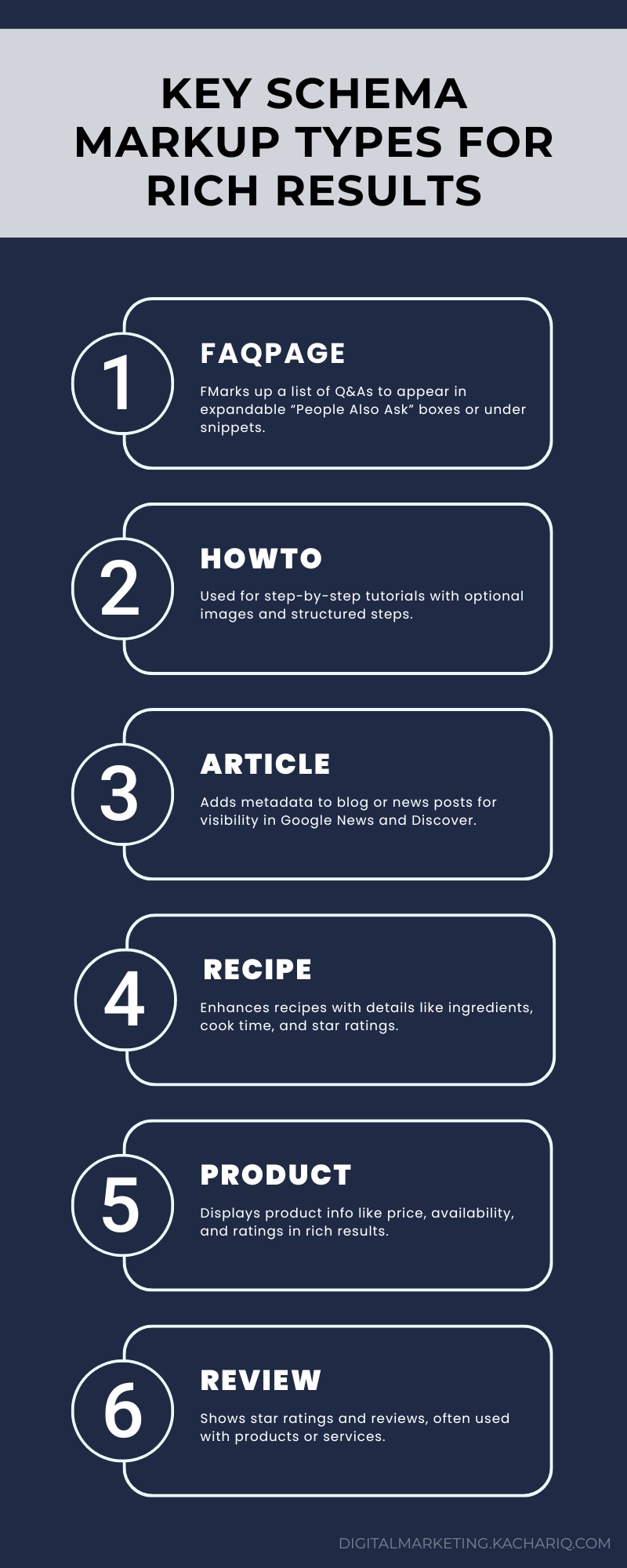
- Key Rich Result Types & How to Optimize Them:
FAQ Rich Results:
- Use FAQ Page schema.
- Clearly list Questions (H2/H3) and Answers (concise paragraphs underneath, 2-5 sentences).
- Questions should be actual user questions (use your PAA research!).
- Answers should be direct and factual.
This type of format usually feeds rich results, as well as the featured snippet box.
How-To Rich Results:
- Use How To schema.
- Essential: Include a clearly structured numbered list of steps to guide users through the process.
- Include clear name (title of the how-to), description, estimated Cost, supply, tool, step (with text and optional image or video per step), total Time.
A well-organized how-to guide increases the chance to win feature snippet positions and dominating inquiries about instructional content.
Review / Rating Snippets:
- Use Aggregate Rating schema (Review schema for individual reviews).
- Must represent genuine, user-generated reviews.
- Display ratings prominently on your page.
Product Rich Results:
- Use Product schema (often with Offer, Aggregate Rating).
- Include essential fields: name, image, description, brand, sku, offers (price, availability, currency), review, rating.
- Keep prices accurate and up-to-date.
Product-rich results support both snippets seo visibility and conversion intent.
Article Rich Results:
- Use Article schema (News Article for news).
- Include headline, image, date Published, date Modified, author.
- Helps with getting headline and image enhancements in results.
This increases headline appearance and images’ eligibility for SERPs.
Video Rich Results:
- Use VideoObject schema.
- Essential: name, description, thumbnail URL, upload Date, duration. Link to the actual video file or embedding page.
- Crucial for Vloggers! Hosting on YouTube? Ensure your YouTube description, tags, and closed captions are optimized too. Google often pulls video snippets from YouTube.
Google frequently pulls video-based example of snippet results directly from YouTube.
Advanced Tactics: Elevating Your Snippet Strategy
The “Snippet Bait” Section:
Include a “Quick Answer” or “Key Takeaways” area near the top of content that is long form.
Purpose:
- Capture paragraph snippets
- Answer the core query immediately
- Feed the featured snippet box clear, and extractable contents
This is among the quickest methods to win feature snippet chances.
Optimizing for “Source” Links:
If Google shows a small snippet of text that connects to a particular area of your site.
Best practices:
- Use clear, compelling headings
- Create jump links that will anchor users to the exact solution
- Ensure that the link section extends beyond the original snippet of text and has real worth
Monitor, Refresh, Defend:
Snippets do not last forever.
Make use of Google Search Console to:
- Filter by Search Appearance
- Clicks and impressions are tracked for related queries involving snippets
- Identify declines before competitors take over
Answers that are out of date lose quickly.
Competitor Snippet Analysis (Reverse Engineering):
If your competitor has an ad-hoc snippet of information you’d like to:
- Review their structure
- Clarity and length of answer
- Check schema usage
- Ask: Can I be clearer, fresher, or more useful?
Then rebuild your section better.
Original Data Wins Snippets:
Research, surveys and exclusive insights give your material unique.
- Present data in clean tables
- Use simple labels
- The table’s headers must be aligned to search goal
Tables are prime real estate for example of snippet extraction.
Measuring Success: What Actually Matters
Winning snippets and rich results is great, but how do you track real impact?
- Google Search Console (GSC): Your primary tool.
- Performance Report: Filter by “Search appearance”:
- “Featured snippet”: See impressions, clicks, CTR, queries for your snippets.
- “Rich result”: See performance for various rich result types (FAQ, How-to, etc.).
- Position Tracking: Track your average position for queries where you have/had a snippet.
- Performance Report: Filter by “Search appearance”:
- Rank Tracking Tools (SEMrush, Ahrefs, Moz): Track keyword rankings specifically noting when you gain or lose a Featured Snippet position. Monitor “SERP Features” reports.
- Analyzing User Behavior:
- CTR (Click-Through Rate): While zero-click is the goal, monitor CTR for queries where you have a snippet. Is it higher than your standard organic CTR for similar positions? A snippet should boost CTR significantly if your meta description is compelling.
- Bounce Rate & Dwell Time: If users do click from a snippet, what do they do? Do they bounce immediately (suggesting the snippet gave the full answer) or engage deeply (suggesting they wanted more)? Both can be valuable, depending on your goal.
- Branded Search Uplift: Track if winning snippets for core terms increases searches for your brand name.
- Conversions (The Ultimate Goal): Are snippet/rich result visitors converting (subscribing, downloading, purchasing, contacting)? Track this through goals in Google Analytics. Segment traffic by “SERP Features” if possible.
The Human Touch: Writing for Snippets AND Souls
Here’s the secret sauce that many snippet optimization guides miss: Don’t write for robots alone. Write for humans first. Google’s algorithms are increasingly sophisticated at understanding user satisfaction.
- Engage, Don’t Just Inform: Your snippet answer might be clinical, but the surrounding content should have personality. Share anecdotes, use relatable metaphors (“Think of Position Zero like the VIP section…”), ask rhetorical questions.
- Solve Real Problems: Go beyond the basic answer. Anticipate the next question, the deeper pain point. Your snippet might answer “how to tie a tie,” but your full section should address “how to tie a tie for a job interview” or “different knots for different occasions.”
- Be Authentic: Let your brand voice shine through. Are you witty? Authoritative? Empathetic? Don’t sterilize your content chasing snippets. Authenticity builds trust, and trust builds authority – which Google rewards.
- Visual Storytelling: Use high-quality images, infographics, and embrace your vlogging superpower – EMBED YOUR RELEVANT VIDEOS! A video embedded near your optimized text answer is prime fodder for a Video Snippet. Provide a concise text summary for the snippet, but let the video offer the deep dive. (e.g., “Here’s a quick summary of featured snippet types. Want the full walkthrough with examples? Watch my video below!”).
Case Study: From Page 2 Obscurity to Position Zero Power
(Hypothetical but based on real principles)
Scenario: “Digital Marketing Vlogger” blog post about “YouTube SEO Tips” was ranking #7. A Featured Snippet (paragraph) existed for the query “what is youtube seo”.
Action Taken:
- Identified Opportunity: Saw we ranked Page 1, snippet existed, we weren’t in it.
- Analyzed Competitor Snippet: Their answer was decent but basic (40 words, just defined it).
- Optimized Our Content:
- Added a dedicated H2: “What is YouTube SEO? (The Complete Definition)”.
- Wrote a concise, 55-word paragraph directly under it, starting with “YouTube SEO is the practice of…”. Included not just the definition, but why it matters for visibility.
- Ensured the section was near the top of the post.
- Added `Article` schema to the page.
- Embedded a relevant existing vlog “YouTube SEO Basics Explained” within that section.
- Promoted the Updated Post: Shared on social channels, mentioned in a newsletter.
Result:
- Within 3 weeks, our paragraph replaced the competitor’s Featured Snippet.
- Organic CTR for that query increased by 210%.
- Views on the embedded YouTube video increased by 35%.
- Overall page traffic increased by 60%, and it eventually climbed to rank #3 organically.
A classic textbook snippet strategy wins.
Common Pitfalls & How to Avoid Them (Don’t Sabotage Your Snippet Success!)
- Keyword Stuffing in Headings/Answers: Sounds unnatural and hurts readability. Google is smart. Use keywords naturally.
- Neglecting Mobile Experience: A poorly formatted mobile page won’t win snippets. Test rigorously.
- Creating Thin Content Just for Snippets: Your page needs substantial value beyond the snippet answer. Thin pages get penalized.
- Forgetting to Update Content: Information changes. Snippets are lost daily due to outdated answers. Schedule content reviews.
- Ignoring Structured Data: Leaving Rich Results on the table by not implementing schema is a massive missed opportunity. It’s easier than you think!
- Over-Optimizing & Losing Humanity: Don’t sacrifice engagement and readability for the sake of a perfectly formatted list. Balance is key.
The Future of Snippets in SEO: AI, SGE & Beyond
The SERP is constantly evolving. Google’s Search Generative Experience (SGE) and advancements in AI are changing the game:
- AI Overviews (SGE): These provide even more comprehensive, AI-generated answers directly on the SERP, potentially pulling from multiple sources. The principles remain similar: Provide the best, most authoritative, well-structured answer. E-E-A-T becomes even more critical. Being cited as a source within an AI overview is the next level of visibility.
- Increased Interactivity: Expect richer, more interactive SERP features. Optimizing for structured data positions you perfectly for this.
- Voice & Visual Search Growth: Zero-click via voice will only increase. Visual search (like Google Lens) may integrate more with snippet-like information overlays.
Staying Ahead: Focus on the timeless principles:
- Unwavering Quality: Be the best answer.
- Technical Excellence: Make it easy for Google to find and understand you.
- User-Centricity: Solve real problems deeply.
- Structured Data Adoption: Speak Google’s language.
- Adaptability: Monitor changes and adjust your tactics.
Your Zero-Click Action Plan (No More Excuses!)
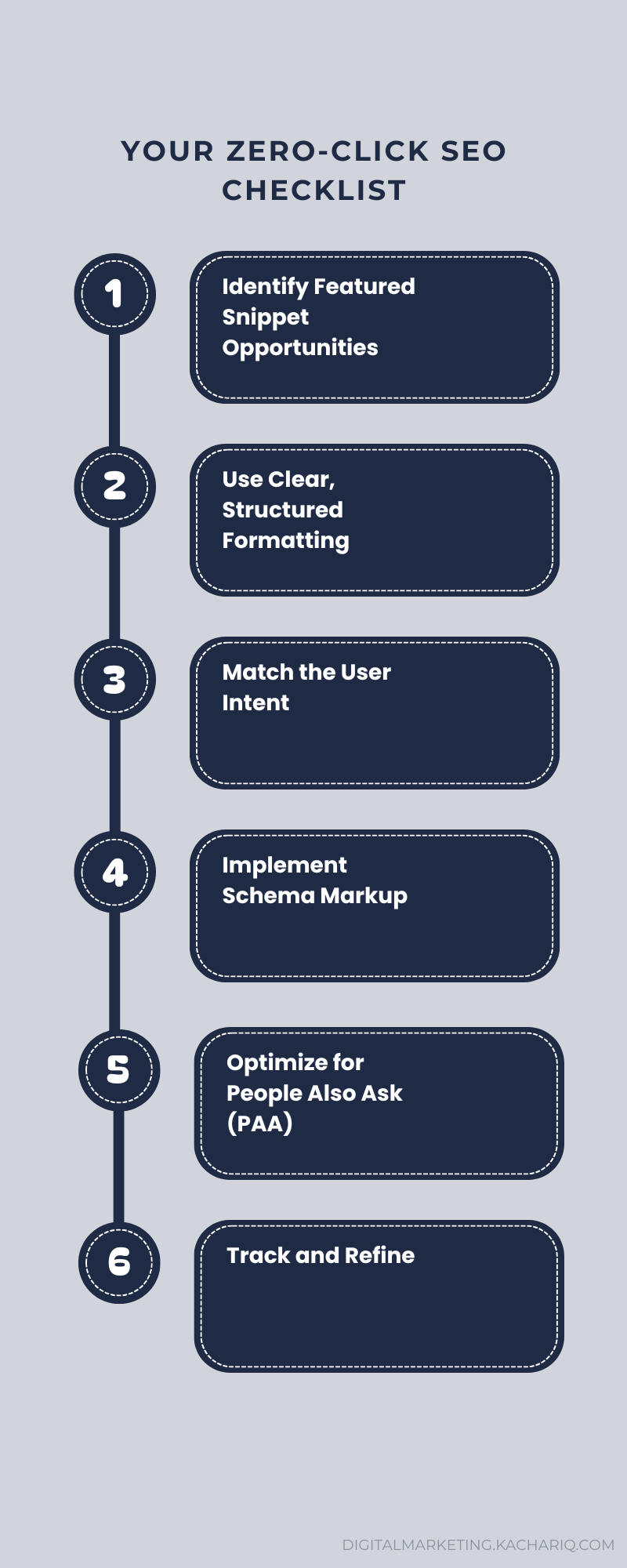
Ready to transform your content into snippet magnets? Here’s your roadmap:
- Audit: Use GSC and rank trackers. Find pages on Page 1 where a snippet exists but you don’t have it.
- Prioritize: Pick 3-5 high-potential targets (high volume, relevant, achievable).
- Optimize: Apply the specific tactics outlined above:
- Structure answers perfectly under clear headings.
- Implement relevant schema markup.
- Format lists and tables correctly.
- Embed relevant videos (Vloggers, this is YOUR edge!).
- Ensure mobile perfection and speed.
- Publish & Promote: Share your optimized content.
- Monitor: Track performance in GSC and analytics weekly.
- Iterate: Update content, refine answers, expand based on PAA questions.
- Scale: Apply the winning formula to new content from the start!
Final Thought
Snippets in seo and rich results are not hacks.
They’re the outcome of an enlightened plan, solid structure and genuine benefit.
As search shifts toward AI-driven answers, the brands that win will be the ones that teach best, explain clearly, and structure intelligently.
Are you interested in knowing more about what this trend is?
Explore our overview of SEO vs. AEO vs. GEO and discover which approach to optimization best suits your needs.




Leave a Reply